Mould Removal in Downtown & Old Toronto
Downtown is mostly condo work for us, from a burst riser on the fortieth floor to water coming through into the unit below.
Old Toronto is Victorian and Edwardian semis through the older neighbourhoods, and a dense band of condo towers through the core and along the waterfront.
In the towers it is burst risers, failed in-suite shut-offs and appliance hoses. In the older housing it is century-old drains, below-grade apartments and basements that were dug out after the house was built.
Mould needs moisture, an organic material to feed on, and time. It can begin to establish between 24 and 48 hours after building materials get wet, and it keeps spreading until the moisture source is fixed and the materials are dry.
Covered by insurance? We bill your insurer directly, so in most cases you pay only your deductible.
Mould removal and remediation in Downtown & Old Toronto: what we see
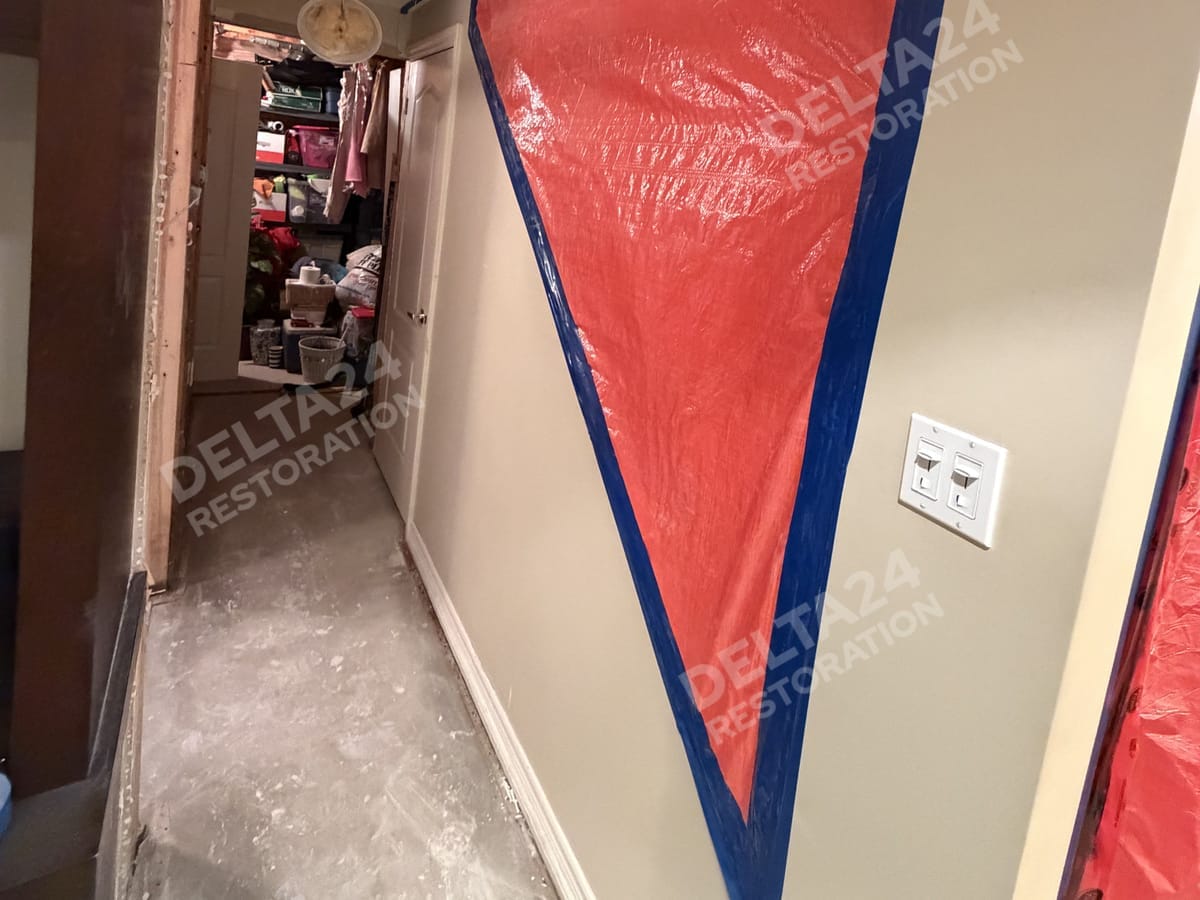
Removing Damaged Drywall and Insulation From a Toronto Utility Room
A narrow utility room beside the water heater needed its drywall and insulation removed. We protected the finished home around it and did the work in suits and respirators behind a zippered containment door.
Where we work in Downtown & Old Toronto
We cover the whole of Downtown & Old Toronto, including The Beaches, Riverdale, Leslieville, The Annex and every neighbourhood in between. Postal areas M4E, M4K, M4L, M4M, M4N, M4P and others.
Full neighbourhood list (19)
Signs of a mould problem
- A persistent musty or earthy smell
- Black, green or white growth on walls, ceilings or framing
- Dark staining on drywall, especially near the floor
- Peeling paint or wallpaper on a cool exterior wall
- Allergy or asthma symptoms that improve when you leave the house
- Condensation on windows through the winter
- A past water loss that was never dried properly
What the job includes
- Inspection and moisture investigation to find the source
- Air and surface sampling where the extent is unclear
- Containment barriers and negative air pressure
- HEPA air filtration throughout the work
- Removal and bagged disposal of affected porous materials
- HEPA vacuuming and antimicrobial treatment of remaining surfaces
- Drying so the conditions that caused it do not return
- Written post-remediation verification
- Rebuilding of anything removed
Who we do this for
- Homeowners
- Buyers and sellers who need a clearance report
- Landlords and tenants
- Property managers and condo corporations
- Schools, clinics and commercial premises
When to call us in Downtown & Old Toronto
Before disturbing it. Scrubbing, sanding or vacuuming mould with a household vacuum sends spores through the rest of the building and turns a one-room job into a whole-house job.
Cost, insurance and who turns up in Downtown & Old Toronto
Cost: on most insured losses you pay only your deductible, because we bill your insurer directly. Not insured? You get a written quote before work starts. How mould removal is priced →
Insurance: we document the loss from the first hour and deal with the adjuster for you. How the claim works →
Who turns up: IICRC-certified technicians, WSIB cleared and insured, working to the IICRC S500 and S520 standards. About Delta24 →
Common questions
Do you work in downtown condo buildings?
Yes, and it is a large share of what we do downtown. We coordinate with concierge and property management, protect the common elements and document each affected unit separately for its own insurer.
My Victorian semi has a dug-out basement. Does that change things?
It often does. Underpinned and benched basements behave differently when they take on water, and the waterproofing detail at the footing matters. We will tell you what we find rather than guess.
How fast does mould grow after water damage?
Mould can begin to establish 24 to 48 hours after materials get wet, and it continues spreading until everything is dried to standard. This is why the first day after a flood matters more than any other.
Is black mould dangerous?
Some moulds produce compounds that affect people with asthma, allergies or weakened immune systems. Rather than trying to identify a colour, treat any significant growth as something to remove properly and find the moisture behind it.