Sewer Backup Cleanup in Whitchurch-Stouffville
Stouffville is a mix of older village homes and new subdivisions, and we cover both.
A small historic core surrounded by rapid subdivision growth, plus rural properties on wells and septic.
Sump failures in the new builds, and in rural properties a septic or well issue can complicate an otherwise straightforward water loss.
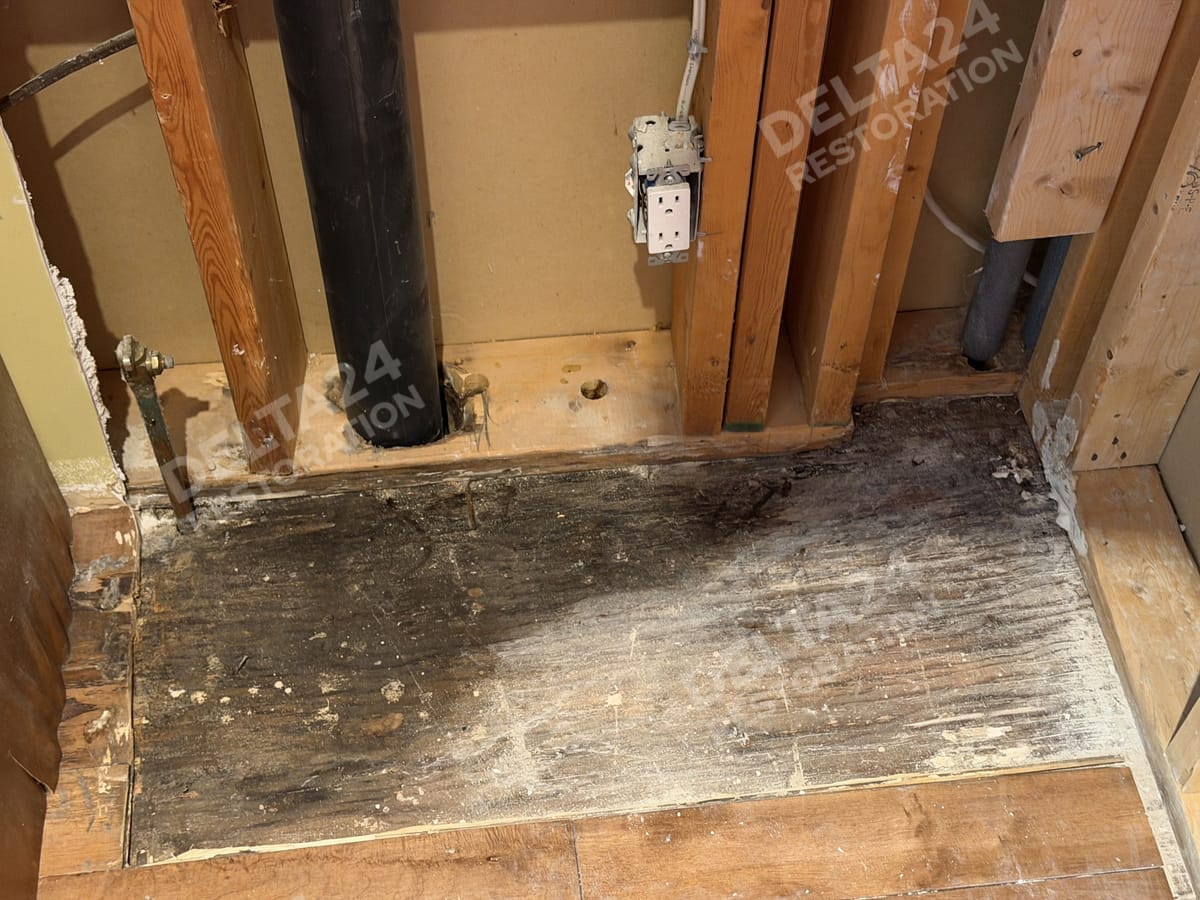
Sewage backup is classed as Category 3 water, sometimes called black water. It carries bacteria and viruses, and porous materials it touches are not salvageable. This is not a job to attempt with a mop and a bucket.
Covered by insurance? We bill your insurer directly, so in most cases you pay only your deductible.
Where we work in Whitchurch-Stouffville
We cover the whole of Whitchurch-Stouffville, including Stouffville, Ballantrae, Musselman Lake, Gormley and every neighbourhood in between. Postal areas L4A.
Full neighbourhood list (6)
What a sewer backup looks like
- Water rising out of a basement floor drain
- Toilets bubbling or draining slowly across the house
- A strong sewage or rotten smell in the basement
- Several fixtures backing up at once
- Dark or murky water with visible solids
- Gurgling from drains when the washing machine empties
What the job includes
- Immediate containment so contamination does not spread through the house
- Removal and disposal of contaminated porous materials to regulation
- Extraction of sewage and standing water
- Cleaning and antimicrobial treatment of all affected hard surfaces
- HEPA air scrubbing during the work
- Structural drying and deodorisation
- Post-cleaning verification before anything is rebuilt
- Documentation prepared specifically for a sewer backup claim
Who we do this for
- Homeowners
- Basement apartment landlords
- Property managers and condo corporations
- Restaurants and food premises
- Municipal and commercial buildings
When to call us in Whitchurch-Stouffville
Immediately, and stop using water in the house. Every toilet flush, sink and washing machine cycle adds to what is coming up. Keep children and pets out of the area, and do not walk through it and then through the rest of the house.
What sewer backup cleanup in Whitchurch-Stouffville costs you
We bill your insurance company directly. On most covered losses that is the only amount you pay us.
Water damage is the most common home insurance claim in Ontario, and the great majority of the work we do is paid by an insurer rather than by the property owner. We document every loss from the first hour with moisture readings, photographs and a written scope, which is the evidence an adjuster needs to approve the work without argument or delay.
We work with all major Canadian insurers and handle the claim from start to finish, including the adjuster's questions. If you are not insured, or the loss falls outside your policy, we will give you a clear written quote before any work begins and we will tell you honestly what can be dried and saved rather than replaced. Keeping material in place is what keeps the cost down, and it is the first thing we look at.
There is no charge for attending to assess an emergency, and no obligation once we have. What your policy covers →
Who turns up in Whitchurch-Stouffville
Delta24 Restoration is a professional restoration contractor serving Toronto and the Greater Toronto Area. Our technicians are certified by the IICRC, the industry standards body for the restoration trade, in Water Damage Restoration (WRT) and Applied Structural Drying (ASD). We are WSIB cleared and carry full commercial general liability insurance. Certificate numbers and a current clearance certificate are provided on request, and property managers and adjusters routinely ask for both before we attend.
We work to the IICRC S500 standard for water damage restoration and the S520 standard for mould remediation. Every job is documented with daily moisture readings, photographs and a written scope, which is why adjusters approve our work without delay.
Asbestos work is carried out to Ontario Regulation 278/05, which sets out the procedures for Type 1, Type 2 and Type 3 operations. Mould work finishes with written post-remediation verification, which is the document a buyer, a lender or an insurer will ask to see.
- IICRC WRT certified technicians
- IICRC ASD certified drying
- WSIB cleared, certificate on request
- Commercial general liability insurance
- Asbestos work to O. Reg. 278/05
- Direct billing with all major Canadian insurers
- Years of insurance claim experience with every major insurer
- Written post-remediation verification on mould work
- Free assessment, no obligation
How the insurance side works
Water damage is the most common home insurance claim in Ontario, and how the claim is handled usually matters more to your bill than the work itself. We document the loss from the first hour: moisture readings, photographs, a written scope, and a daily drying log. That is the evidence an adjuster needs to approve the work without arguing about it.
We bill your insurer directly. In most cases the only money you hand over is your deductible, which on Ontario policies commonly sits between $500 and $2,500.
Which losses are covered depends entirely on where the water came from. A burst pipe or a failed appliance is normally covered under a standard policy. Water coming up through a floor drain is sewer backup, which is almost always a separate endorsement you have to have purchased. Water entering from outside during heavy rain is overland flood, which is another endorsement again. A single storm can produce all three at once, which is why adjusters care so much about the source.
Full guide: is a flooded basement covered by insurance? →
How the claim works, and what your insurer covers →
Common questions
Do you work on rural properties with septic systems?
Yes. A backup on a septic system is handled as contaminated water, and the source investigation is different from a municipal sewer backup.
How far out do you go past Stouffville?
We cover Ballantrae, Musselman Lake and the surrounding rural roads. Call and we will confirm.
Is sewage backup dangerous?
Yes. Sewage is Category 3 water and carries bacteria, viruses and parasites. Porous materials it contacts, including carpet, underlay, drywall and insulation, generally have to be removed rather than cleaned.
Should I call the City?
Yes. Report it to the City on 311. A blocked municipal sewer main is a common cause, and the City will send a crew to check the line under your street. It also creates a record, which matters if you make a claim against the City.
Is sewer backup covered by home insurance?
Only if you carry the sewer backup endorsement. It is not included in a standard Ontario policy by default. Check your declaration page or ask your broker, and photograph everything before anything is moved.
How do you get rid of the smell?
The smell goes when the contaminated material goes. We remove affected porous materials, clean and treat the hard surfaces, run HEPA air scrubbers during the work and deodorise once the area is dry. Masking the odour without removing the source does not hold.