Clearing Out Wet Insulation and Drywall, Back to a Clean Slab
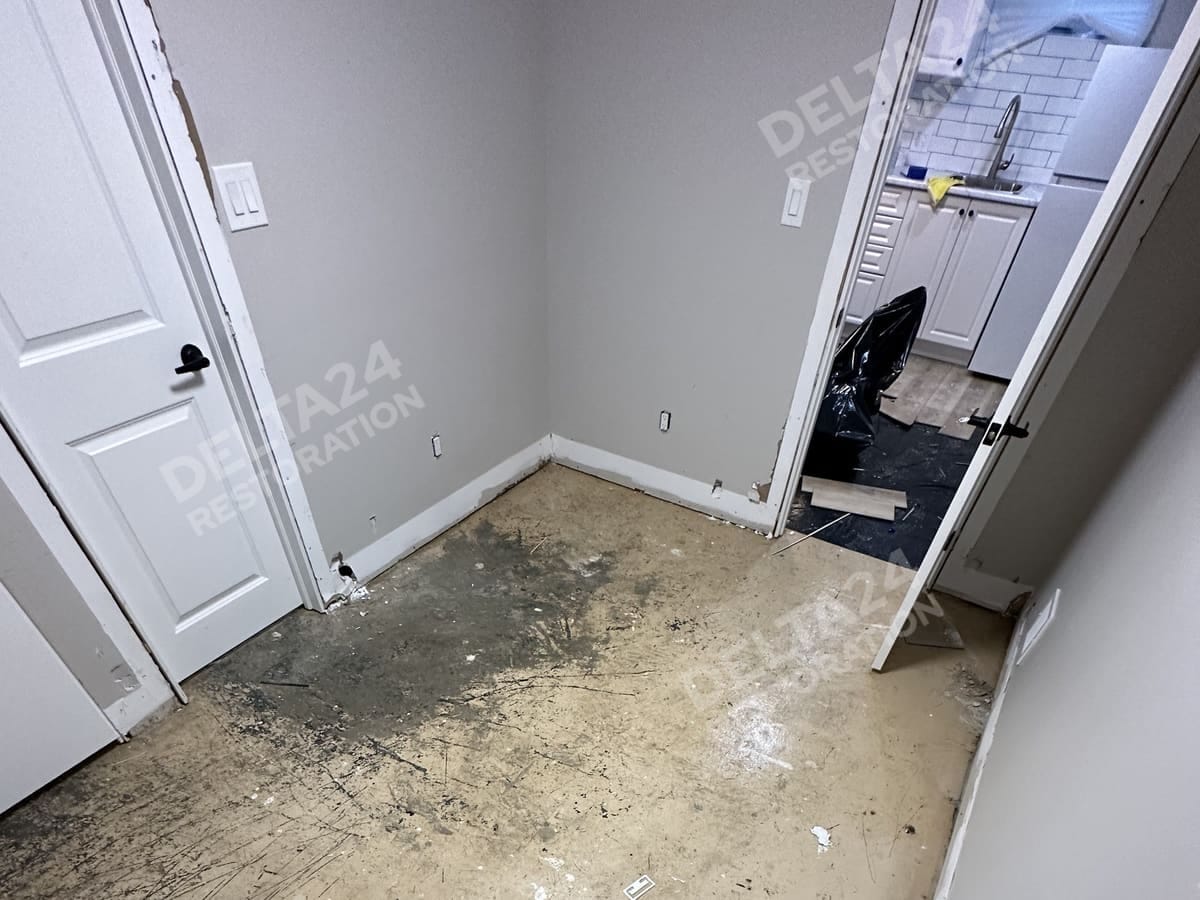
June 2026: a finished basement with grey walls and laminate floors had water damage around the base of the walls. We cut out the wet drywall and insulation, cleared out the debris and flooring, and left clean rooms on bare concrete, ready to dry and rebuild.
Project snapshot
- Client
- Homeowner, finished basement
- Location
- Greater Toronto Area
- Service
- Basement Mould Removal
- Date
- June 2026
Scope of work
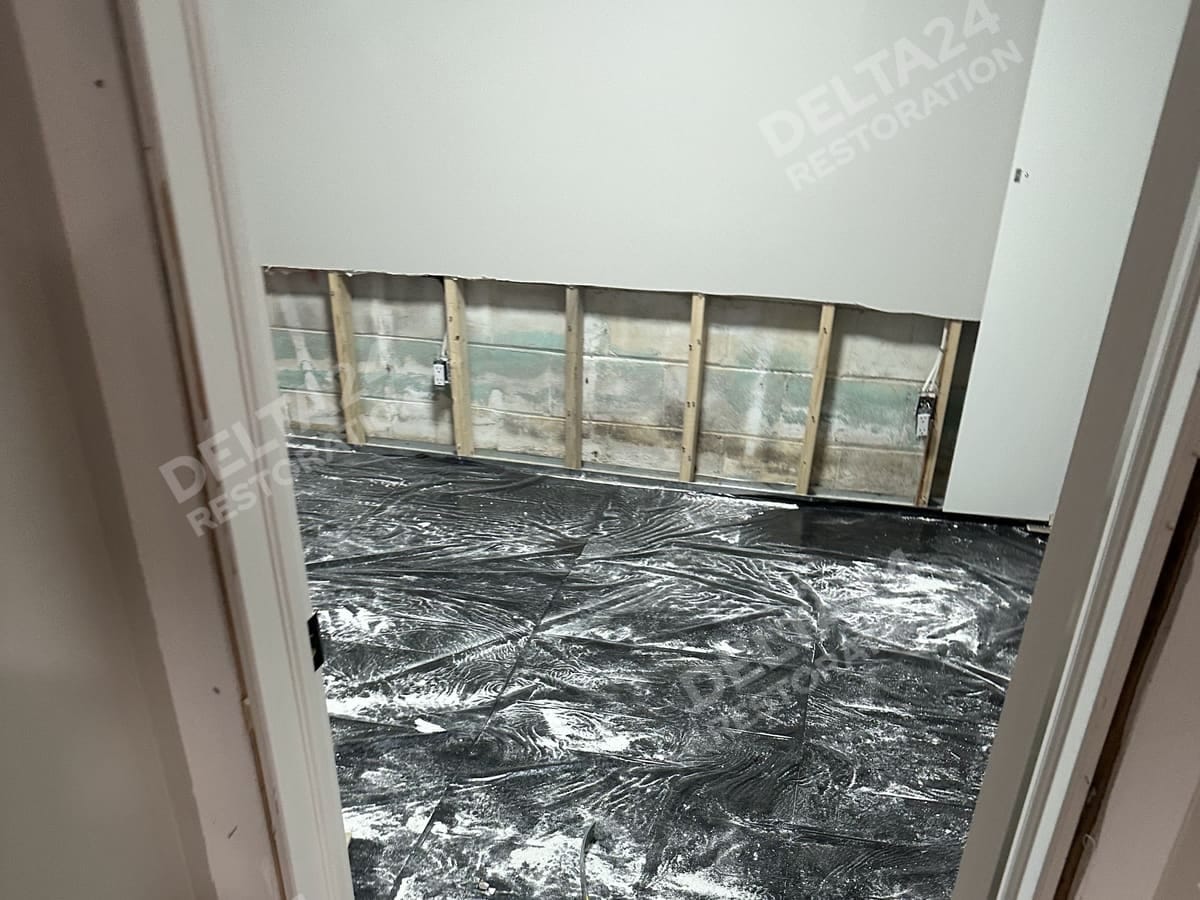
- Drywall cut out around the base of the walls
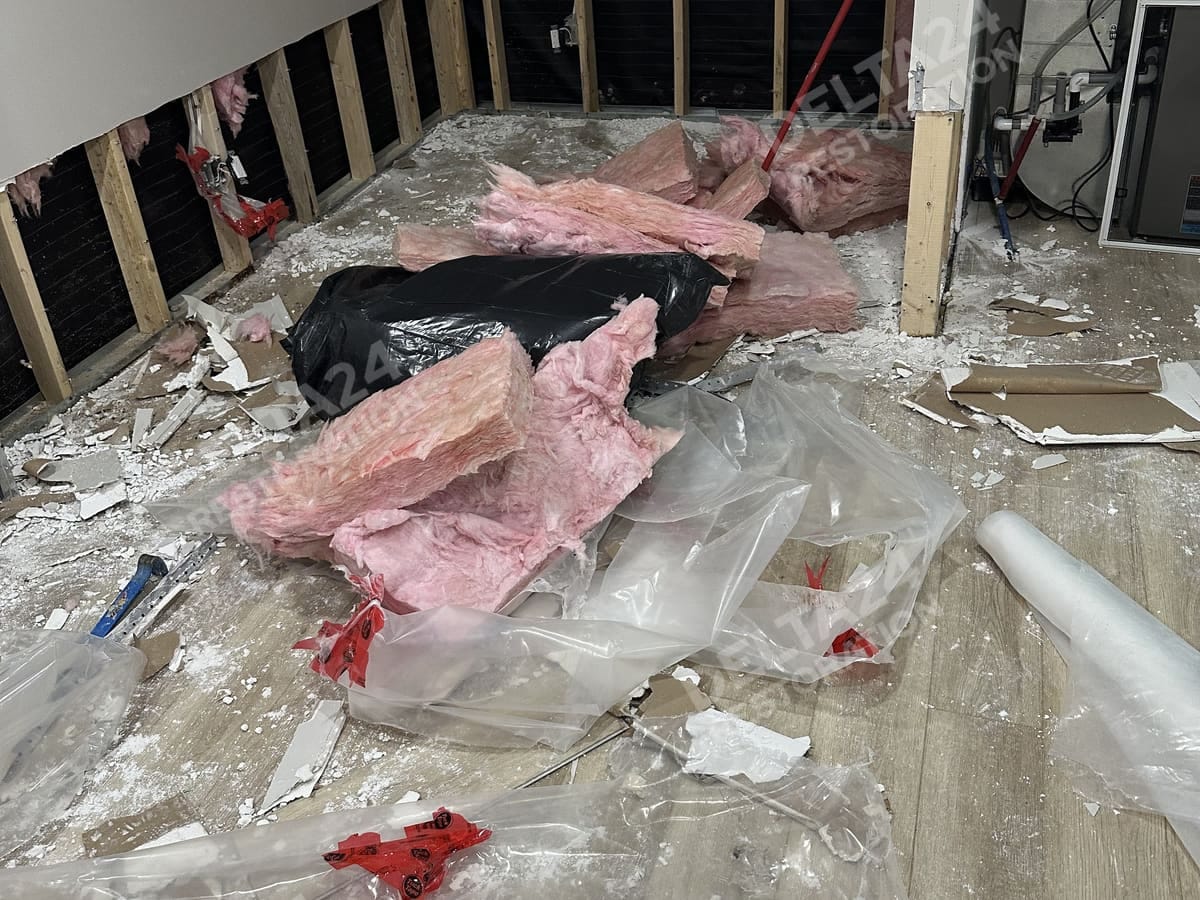
- Wet insulation removed and bagged
- Flooring and debris cleared out
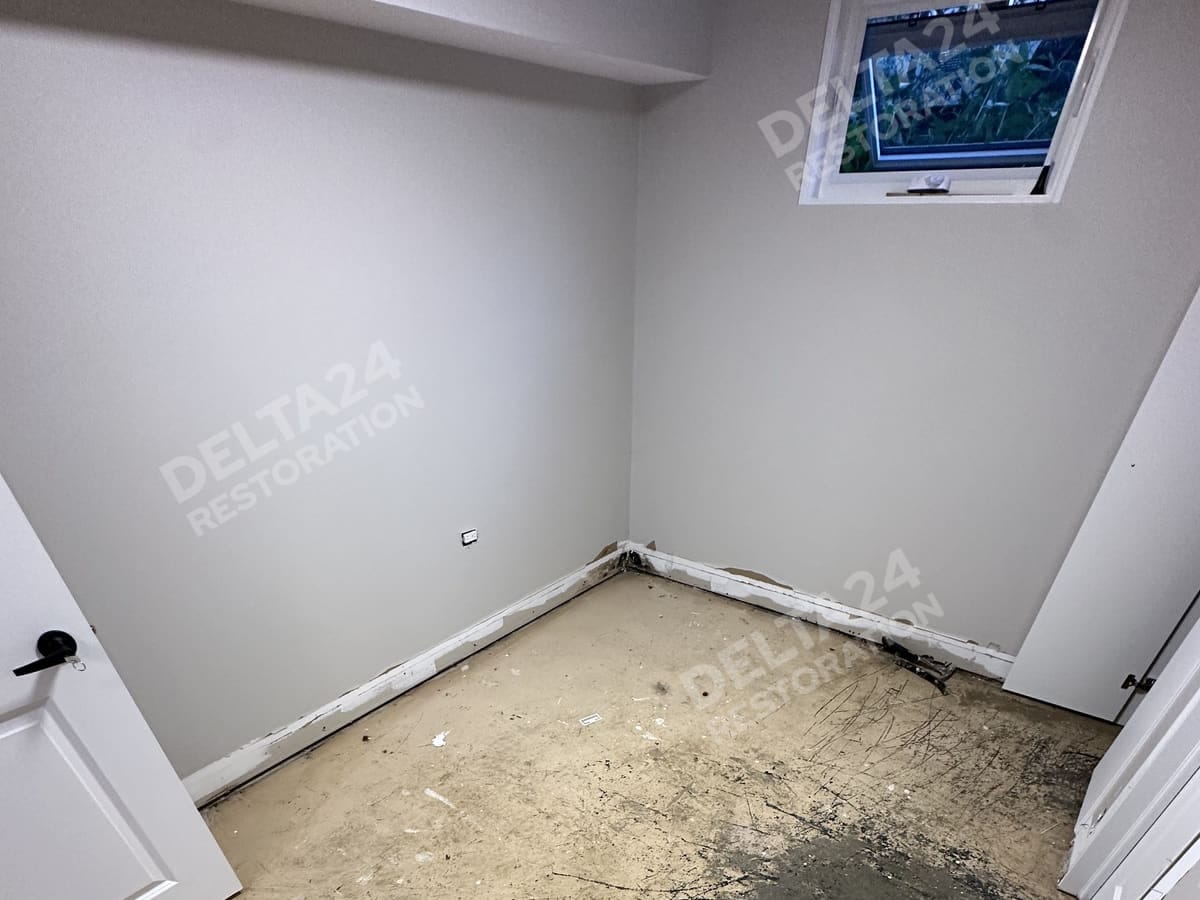
- Rooms cleaned back to the concrete slab
The challenge
Water had soaked the bottom of the walls in several rooms. Behind the drywall, the pink insulation had absorbed it too, and wet insulation pressed against a concrete foundation is one of the most common places for mould to start in a GTA basement.
Our approach
Take out everything that had soaked up water, down to the framing and the slab, so nothing wet was left inside the walls or under the floor.
What we did
- Cut the drywall out around the base of the walls in each room.
- Pulled out the wet insulation and bagged it.
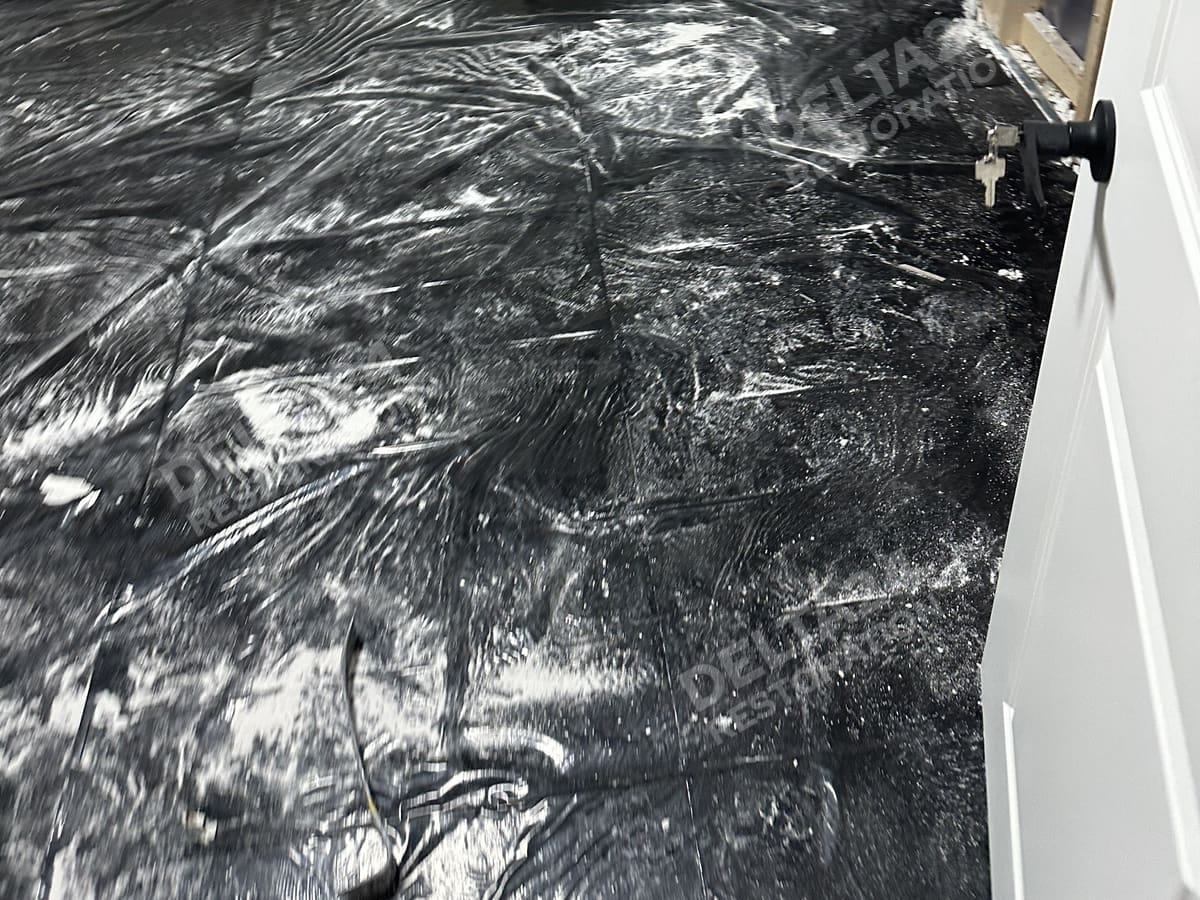
- Cleared the flooring and the demolition debris.
- Cleaned the rooms back to the bare concrete floor.
The result
- No wet insulation left inside the walls
- Clean, empty rooms on bare concrete
- Framing open to dry and be checked
- Ready for drying and rebuild
Know-how from our crew
Why wet insulation has to go
Fibreglass insulation holds water against the foundation and the framing, and it does not dry inside a closed wall. Leaving it in is the usual starting point for mould and a musty smell months later.
Back to the slab
Clearing the floor to bare concrete shows exactly where water sat, lets the slab dry, and gives a clean, even base for the new floor.
Basements and the foundation
A basement wall sits against cold concrete and soil. Moisture there lingers longer than anywhere else in the house, which is why basement repairs are dried and checked before they are closed up.
The job in photos