Tearing Out and Drying a Water-Damaged Basement in One Day
June 2026: a finished basement with hardwood floors had water damage through several rooms, the hallway and the stairs. In a single day our crew sealed off the work area, removed the wet hardwood, drywall and ceiling sections, and set up drying.
Project snapshot
- Client
- Homeowner
- Location
- Greater Toronto Area
- Service
- Water Damage Restoration
- Date
- June 2026
Scope of work
- Containment sheeting to keep dust out of the rest of the house
- Furniture wrapped and protected in place
- Wet hardwood flooring removed
- Drywall cut out along the bottom of the walls
- Ceiling opened where water had reached it
- Air movers and a dehumidifier set through every room
The challenge
Water had spread through a whole finished level: bedrooms, a hallway, the bottom of the stairs and a bathroom. The hardwood had cupped and lifted, the bottom of the drywall was wet all the way round, and water had reached the ceiling in places.
The furniture was still in the rooms, and the rest of the house above needed to stay clean and usable.
Our approach
Seal the work area off first, then take out every wet material in one push so drying could start the same day. Speed matters here: the longer wet hardwood and drywall stay in, the more the subfloor and framing absorb.
What we did
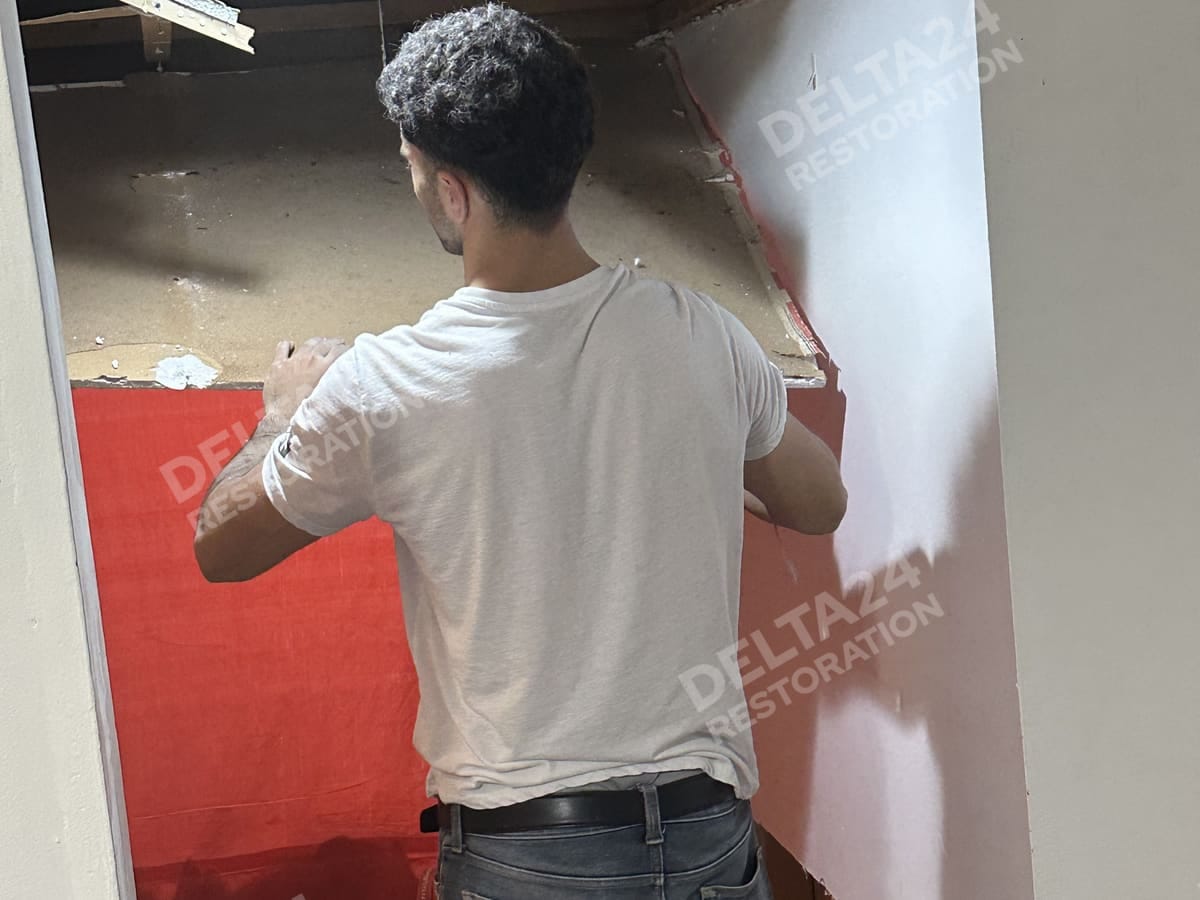
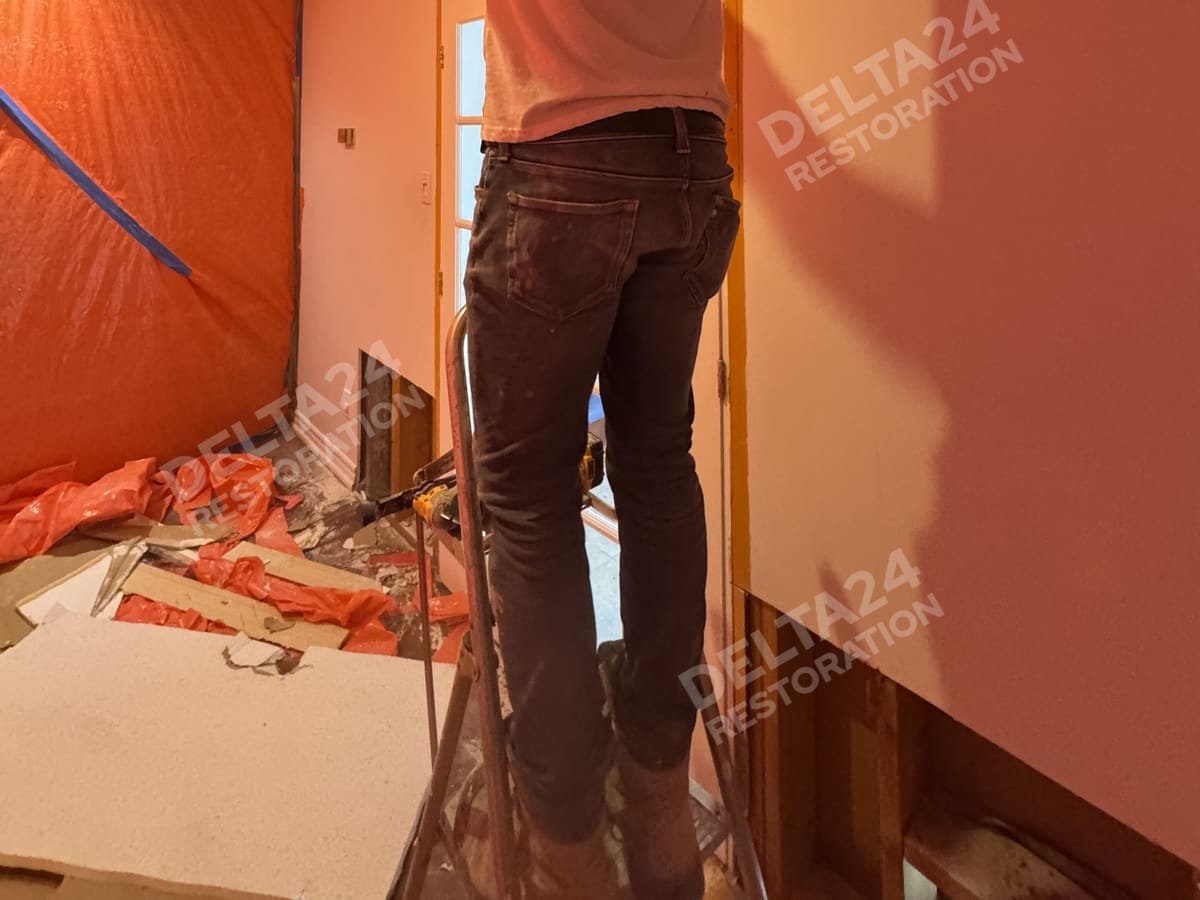
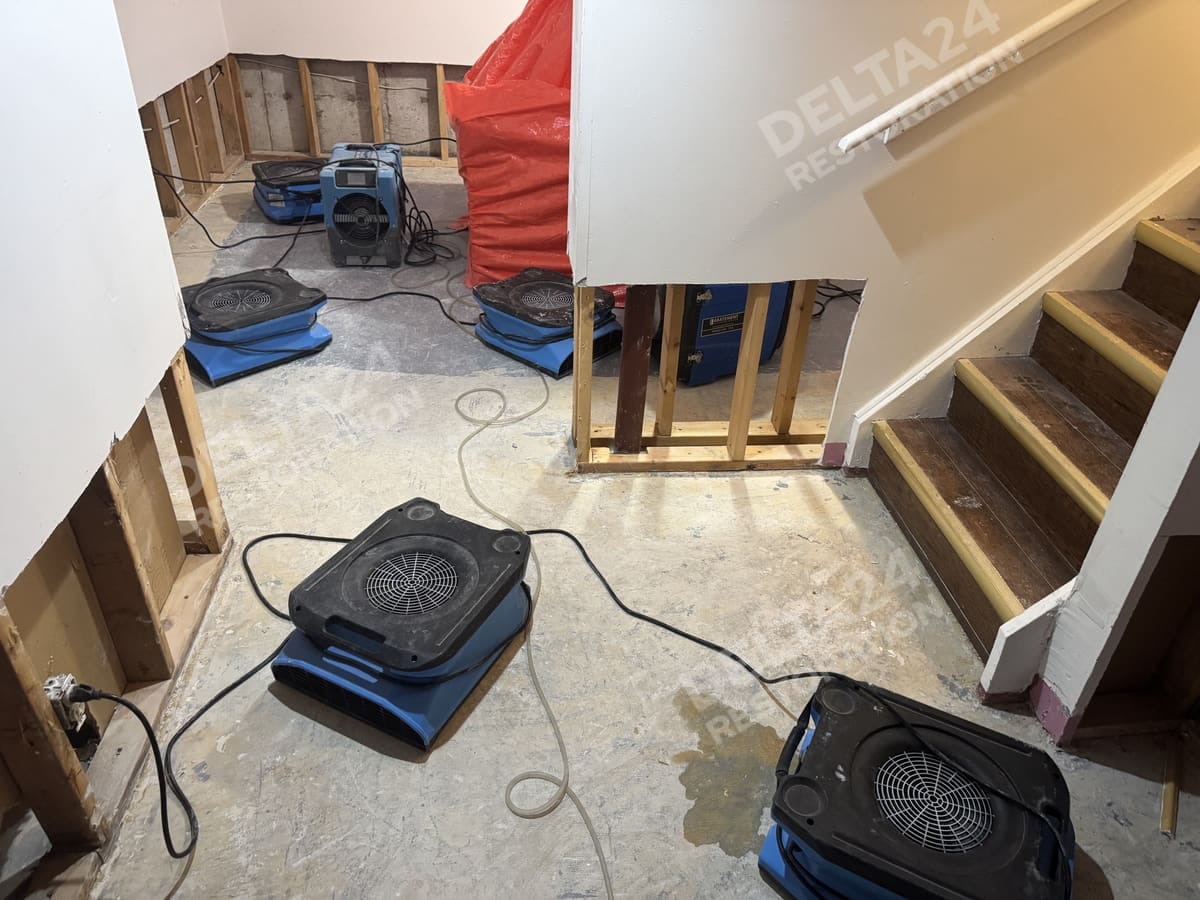
- Hung red containment sheeting and taped it to separate the work area from the rest of the house.
- Wrapped the furniture that stayed in the rooms.
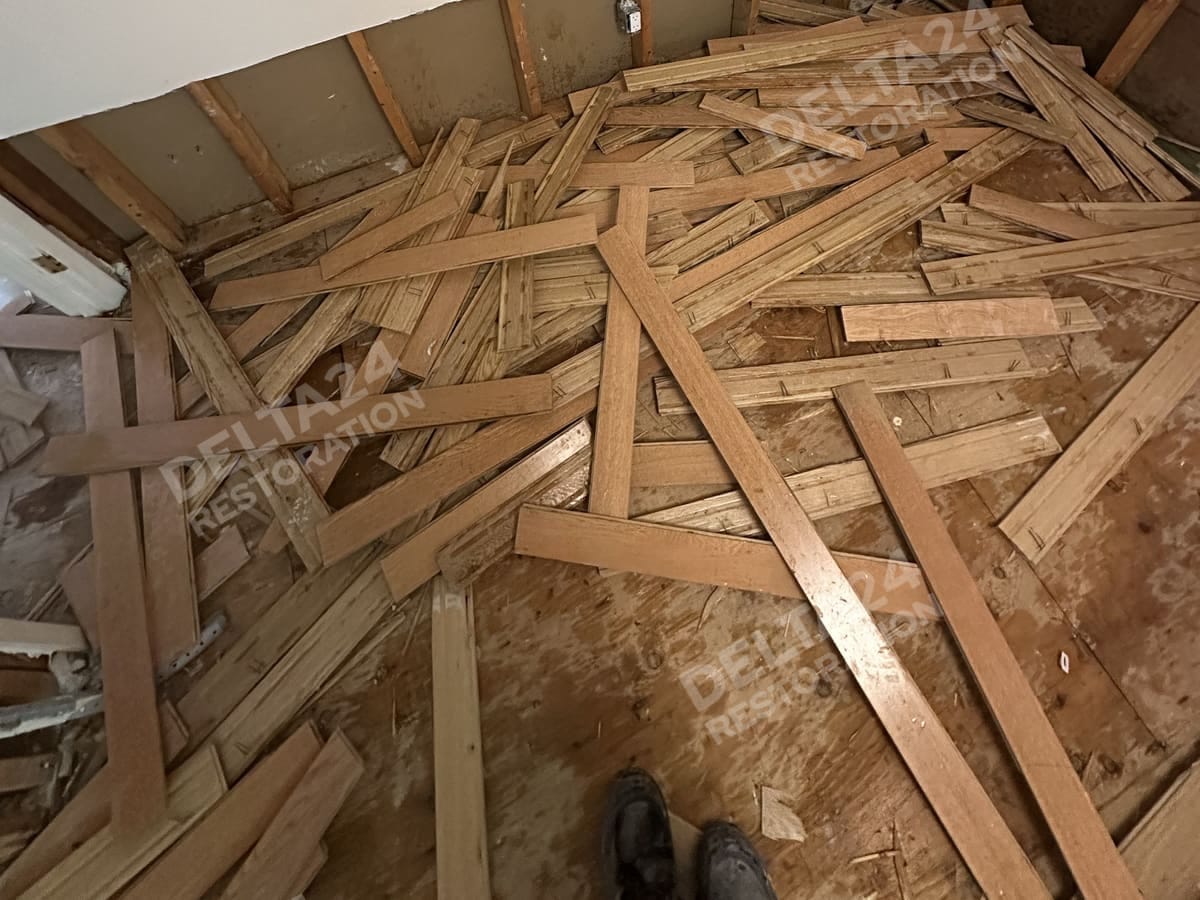
- Pulled up the wet hardwood flooring room by room.
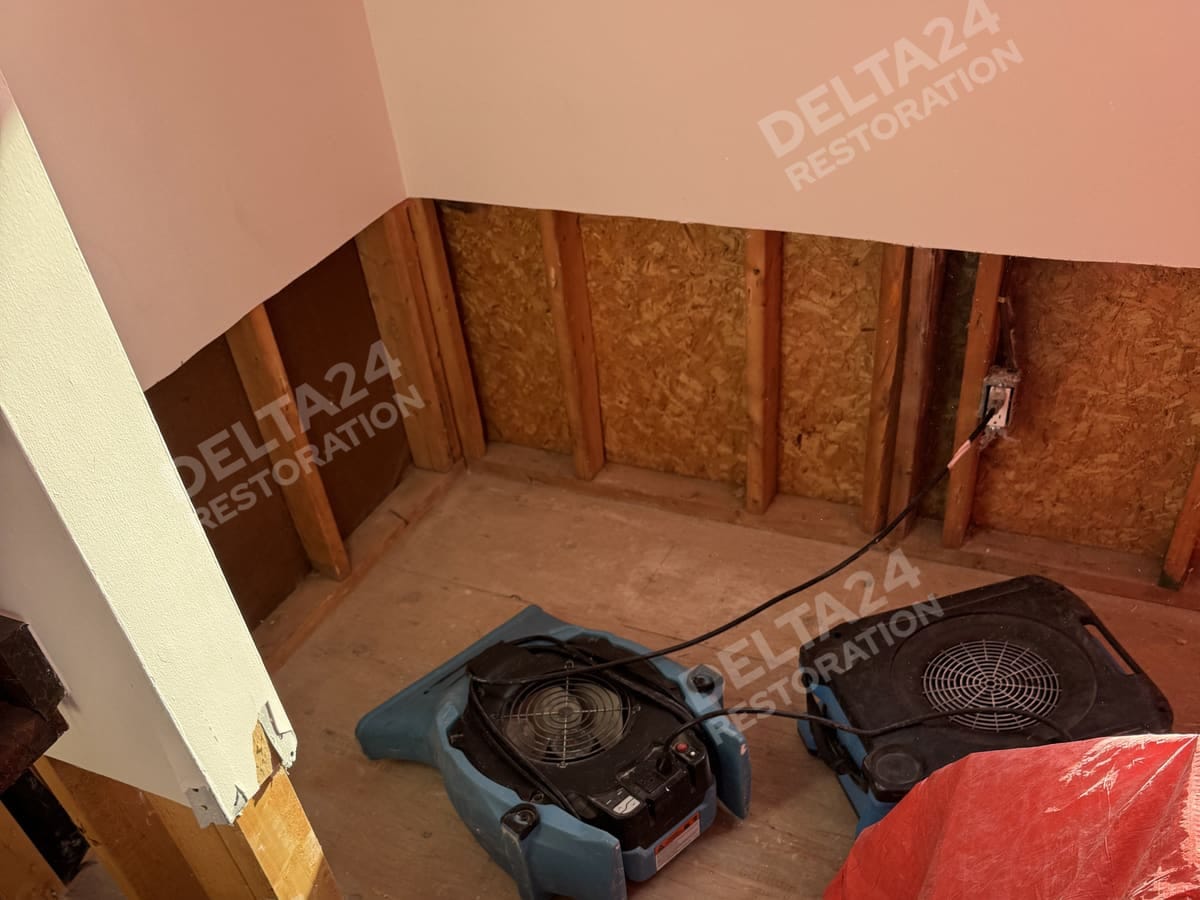
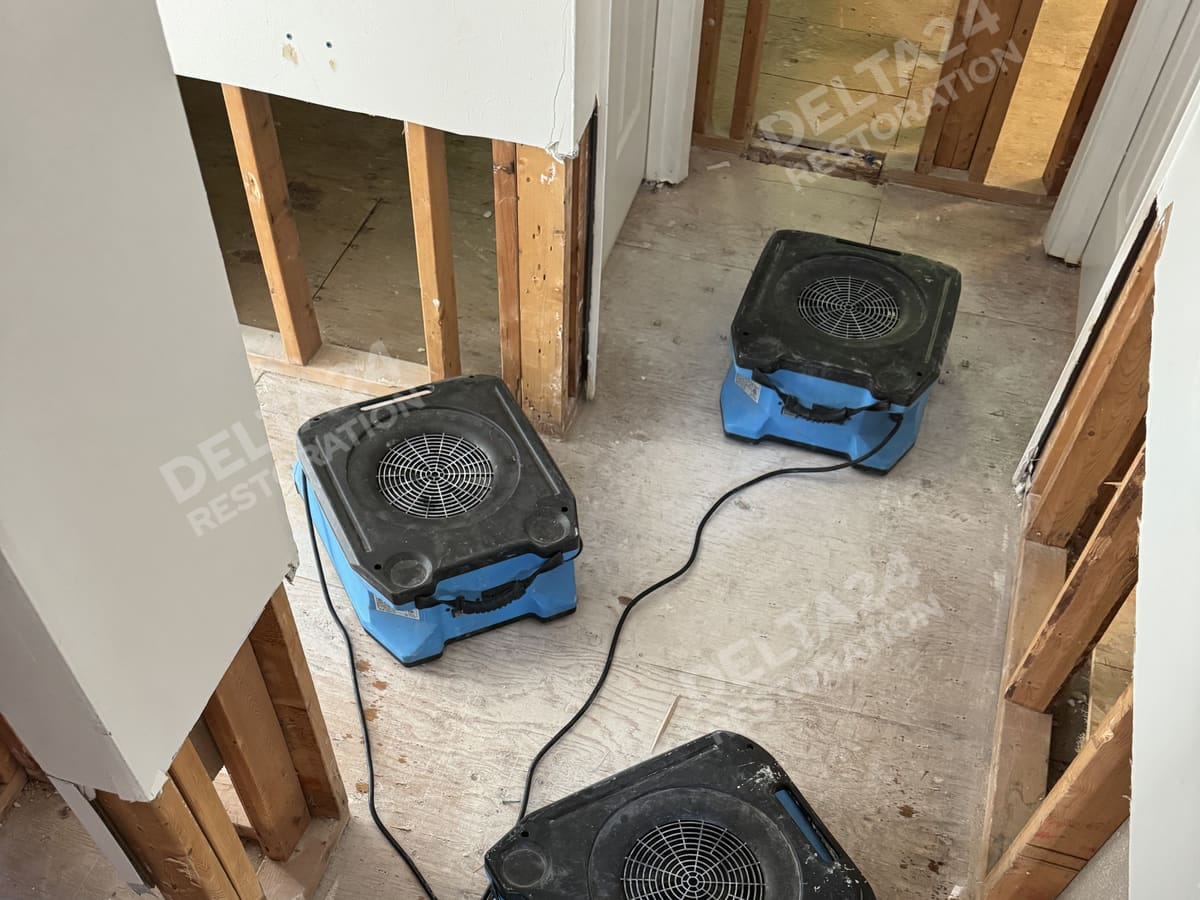
- Cut the drywall out along the bottom of the walls to expose the wet framing.
- Opened the ceiling where water had soaked into it.
- Set air movers along the hallway and rooms with a dehumidifier, so drying started the same day.
The result
- All wet hardwood, drywall and ceiling sections removed in one day
- The rest of the house kept clean behind containment
- Drying running the same day
- Framing open so it could dry fully
Know-how from our crew
Why the hardwood came up
Solid hardwood that has soaked up water cups and lifts, and the subfloor underneath stays wet while it is down. Lifting it lets the subfloor dry and stops the damage spreading.
Cutting drywall along the bottom
Water wicks up drywall from the floor. Cutting a clean line above the wet area and removing the bottom section exposes the framing and insulation so they can dry, and makes the repair simple later.
What the red sheeting is for
Containment keeps dust and debris in the work area, so the rest of the home stays clean while the crew works.
The job in photos