Drying Out a Flooded Wood-Panelled Basement, Down to the Studs
A finished basement with wood panelling, carpet and a wood stove had taken on water. The carpet was soaked through and the water had wicked up behind the panelling. We moved and protected the contents, stripped the room to the studs and dried it out before the rebuild.
Project snapshot
- Client
- Homeowner, finished basement
- Location
- Greater Toronto Area
- Service
- Flooded Basement Cleanup
Scope of work
- Contents wrapped, moved upstairs and outside under cover
- Wet carpet and underlay removed
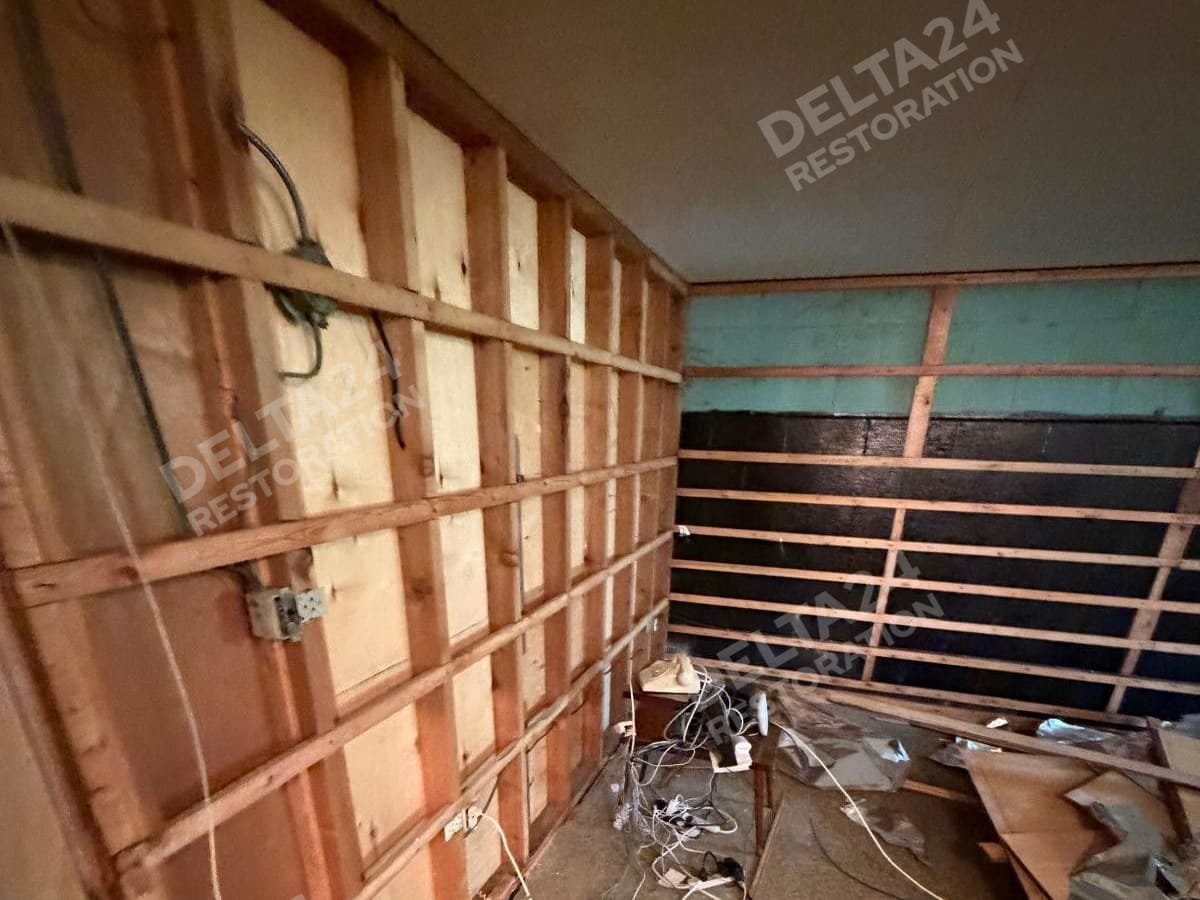
- Panelling and wall finishes stripped to the studs
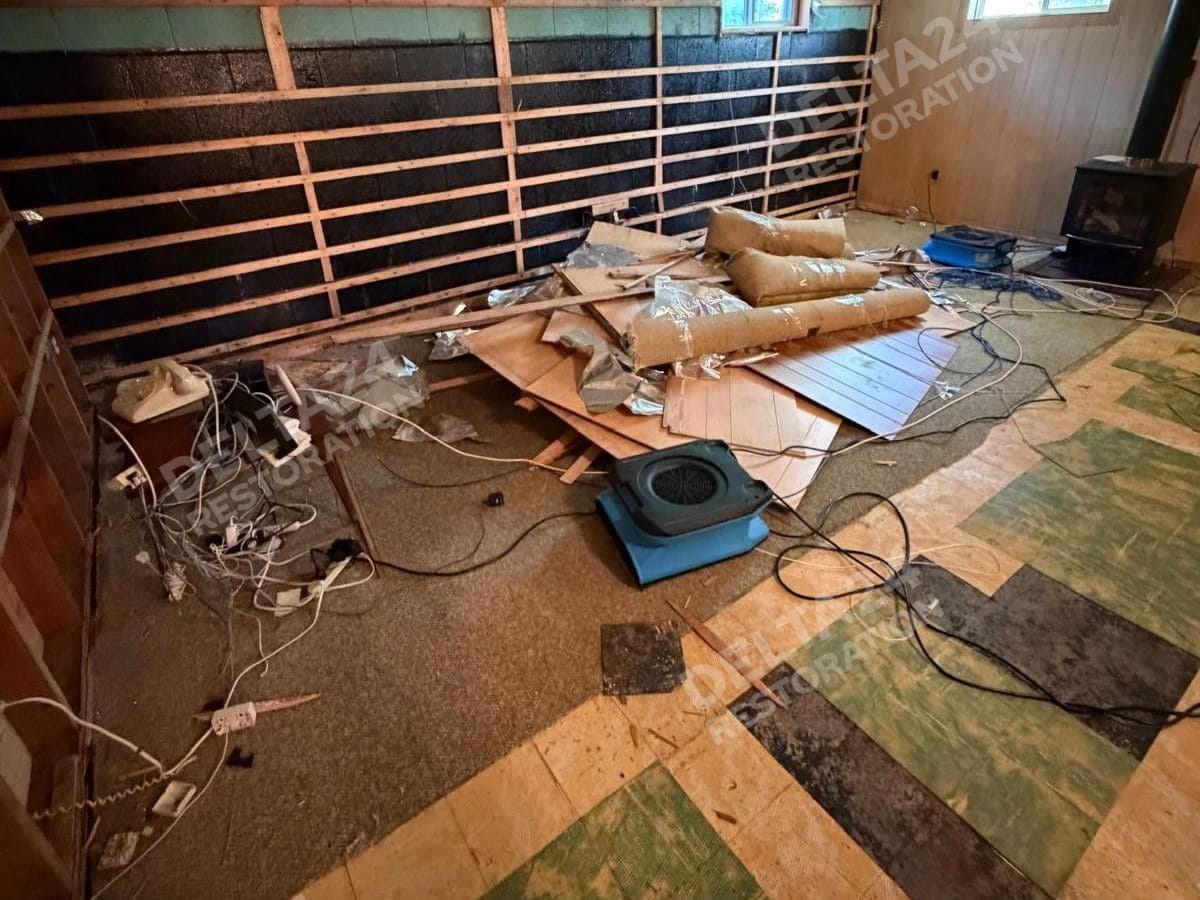
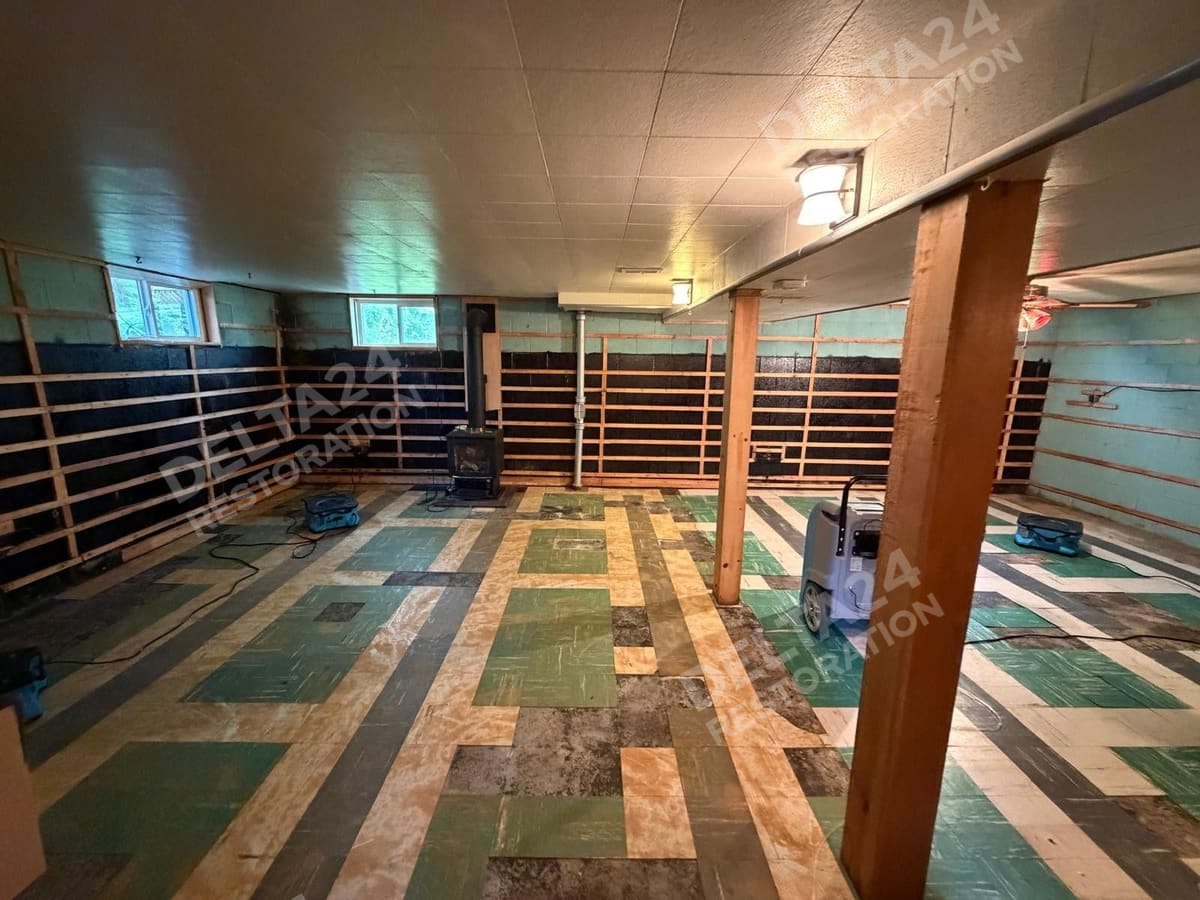
- Air movers and dehumidifiers set for structural drying
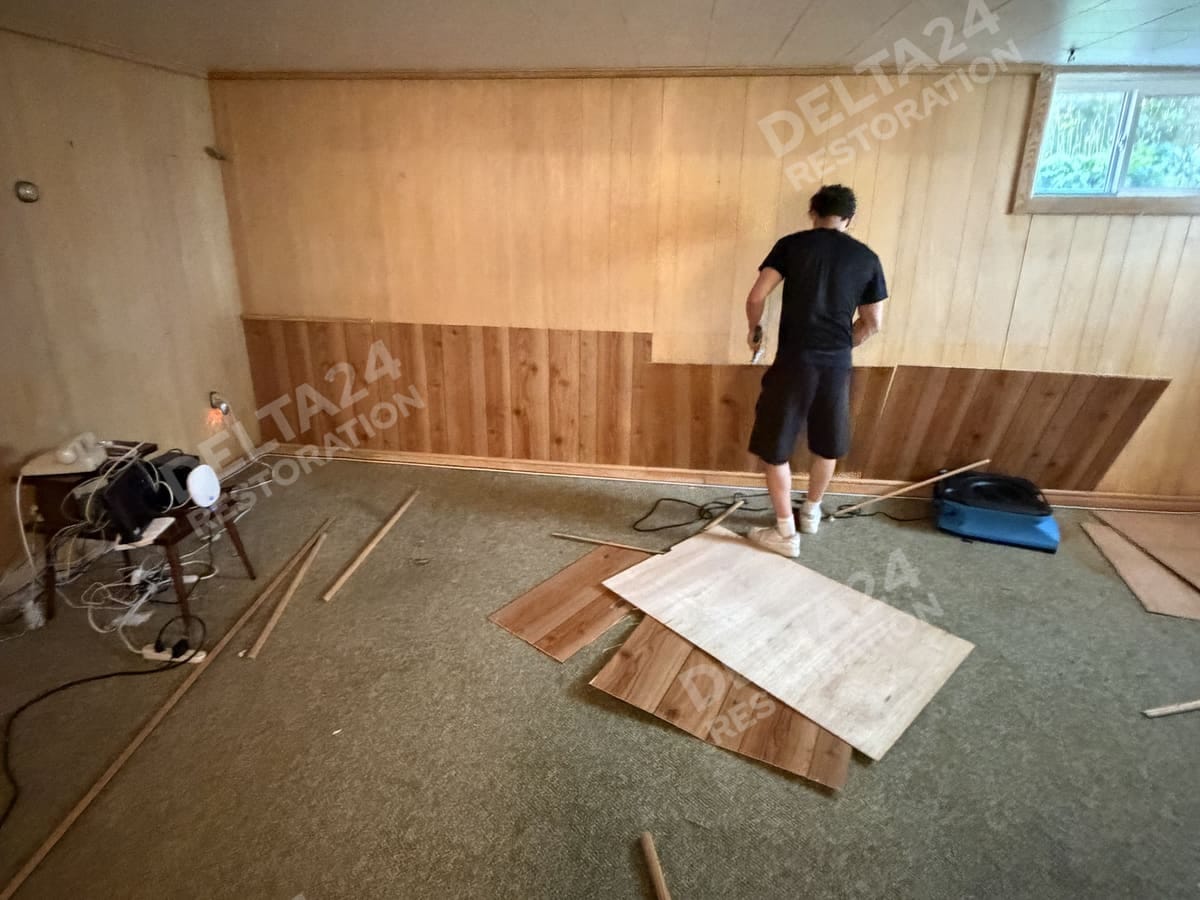
- Panelling reinstalled once the structure was dry
 BeforeAfter
The challenge
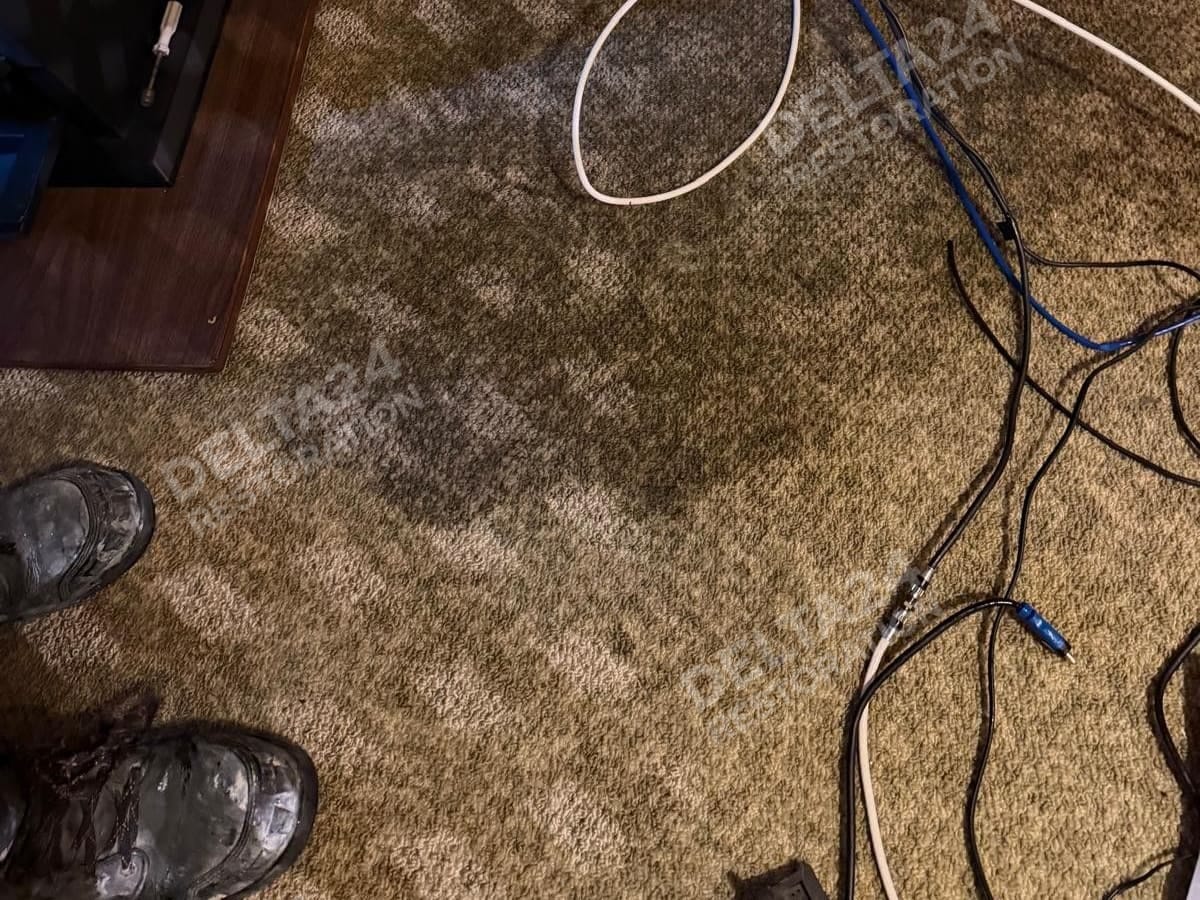
The carpet across the whole room was saturated, and water had travelled under the panelling and up the walls behind it. In a finished basement like this, the water you can see is only part of it: the underlay, the bottom of the panelling, the insulation and the framing behind it all hold moisture.
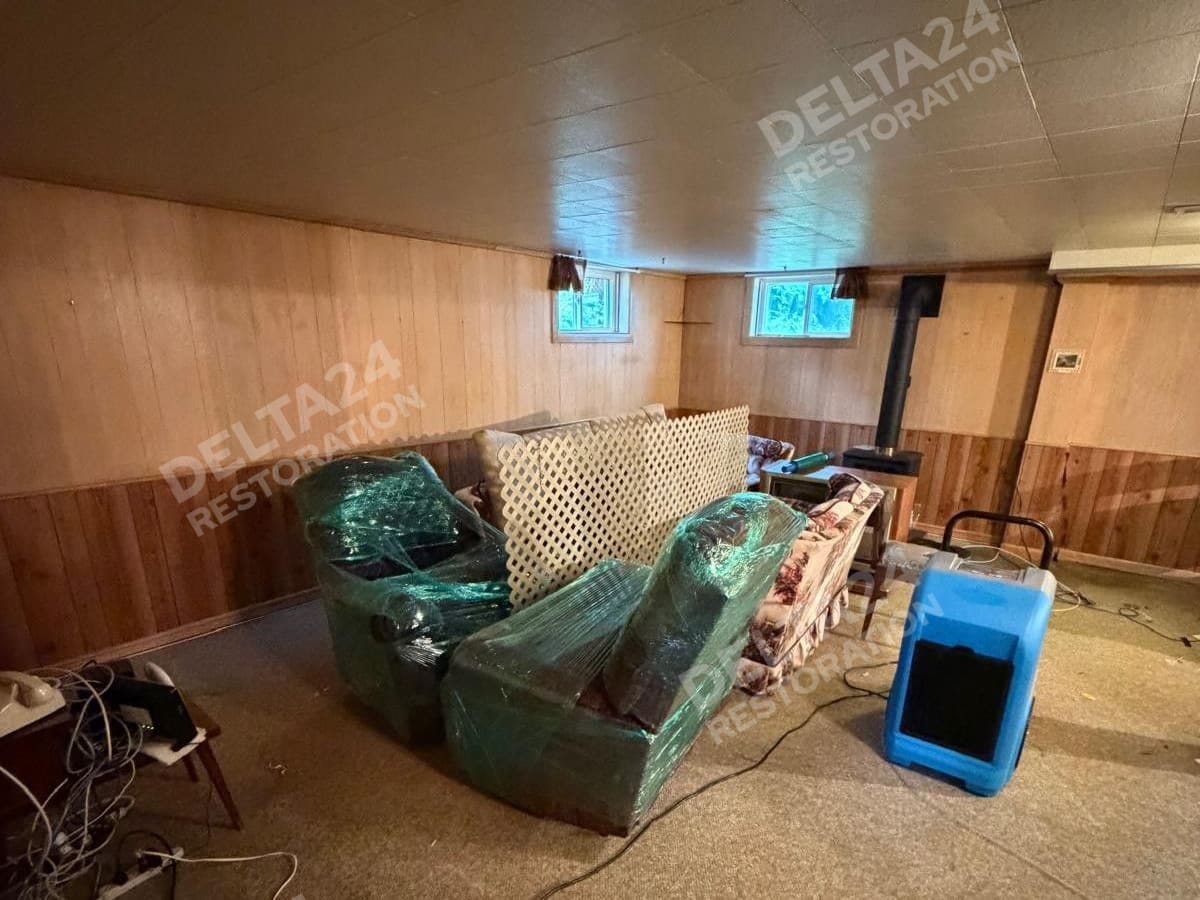
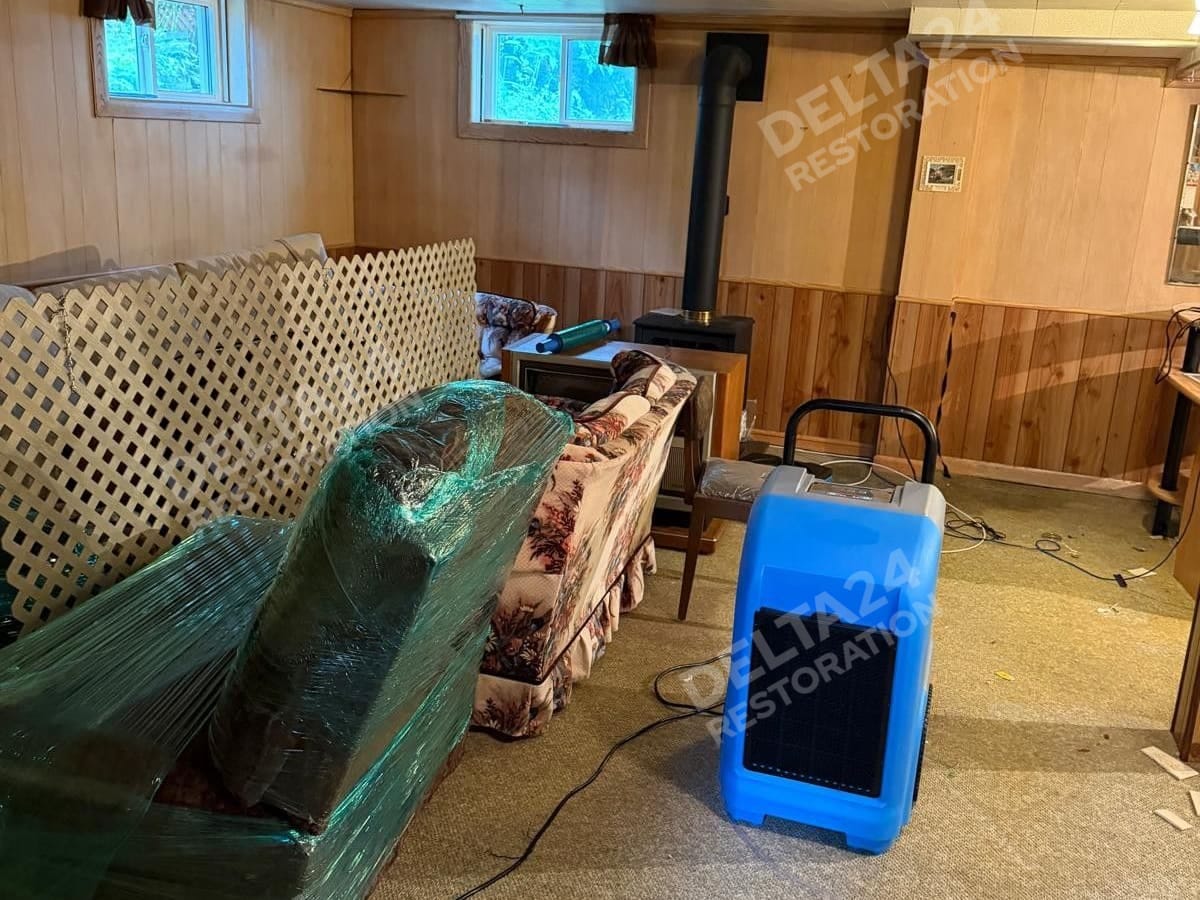
The room was also full: a sofa set, a wood stove area and boxes of the family’s belongings, all sitting on wet carpet.
Our approach
Protect what can be saved first, then take out everything that holds water so the structure itself can dry. Panelling and carpet over wet framing will keep it damp for weeks if they stay on, and that is how mould starts behind the walls.
What we did
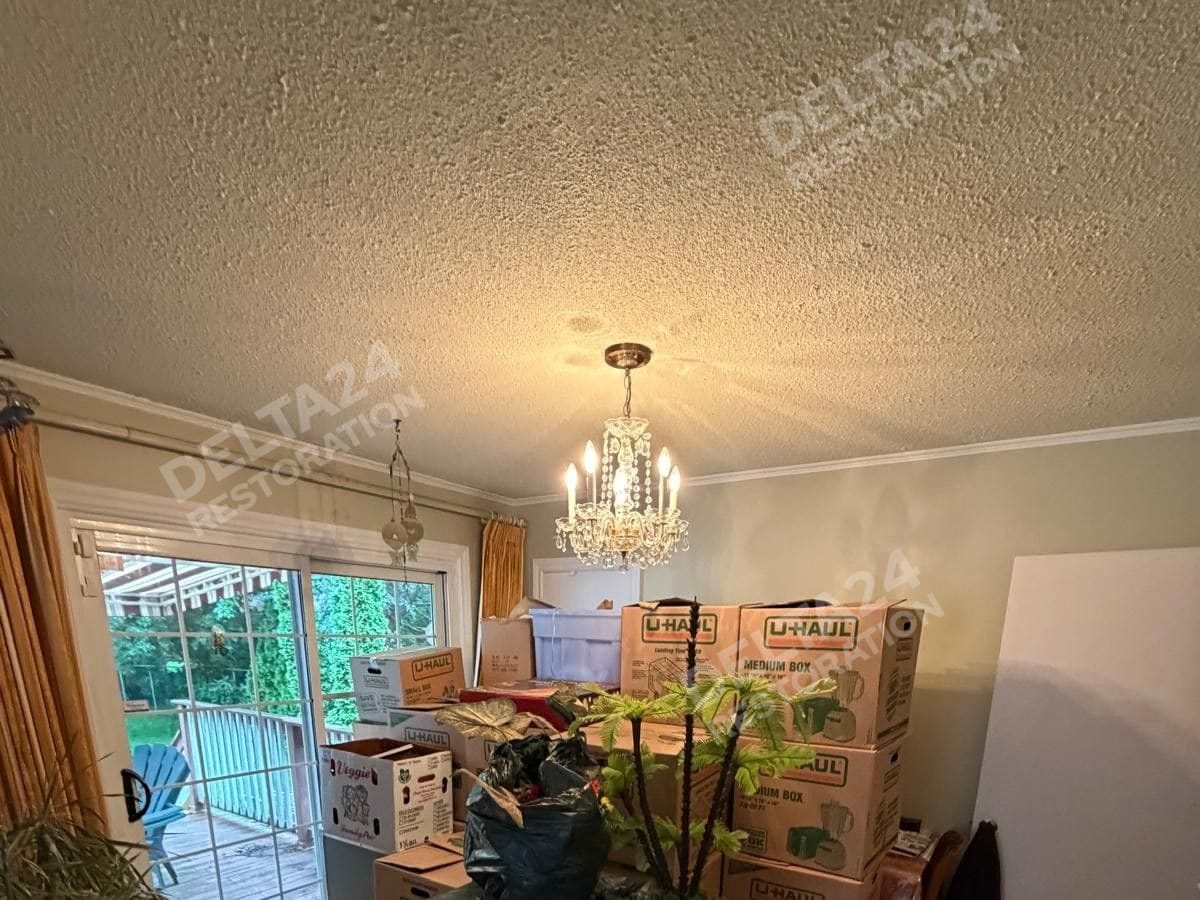
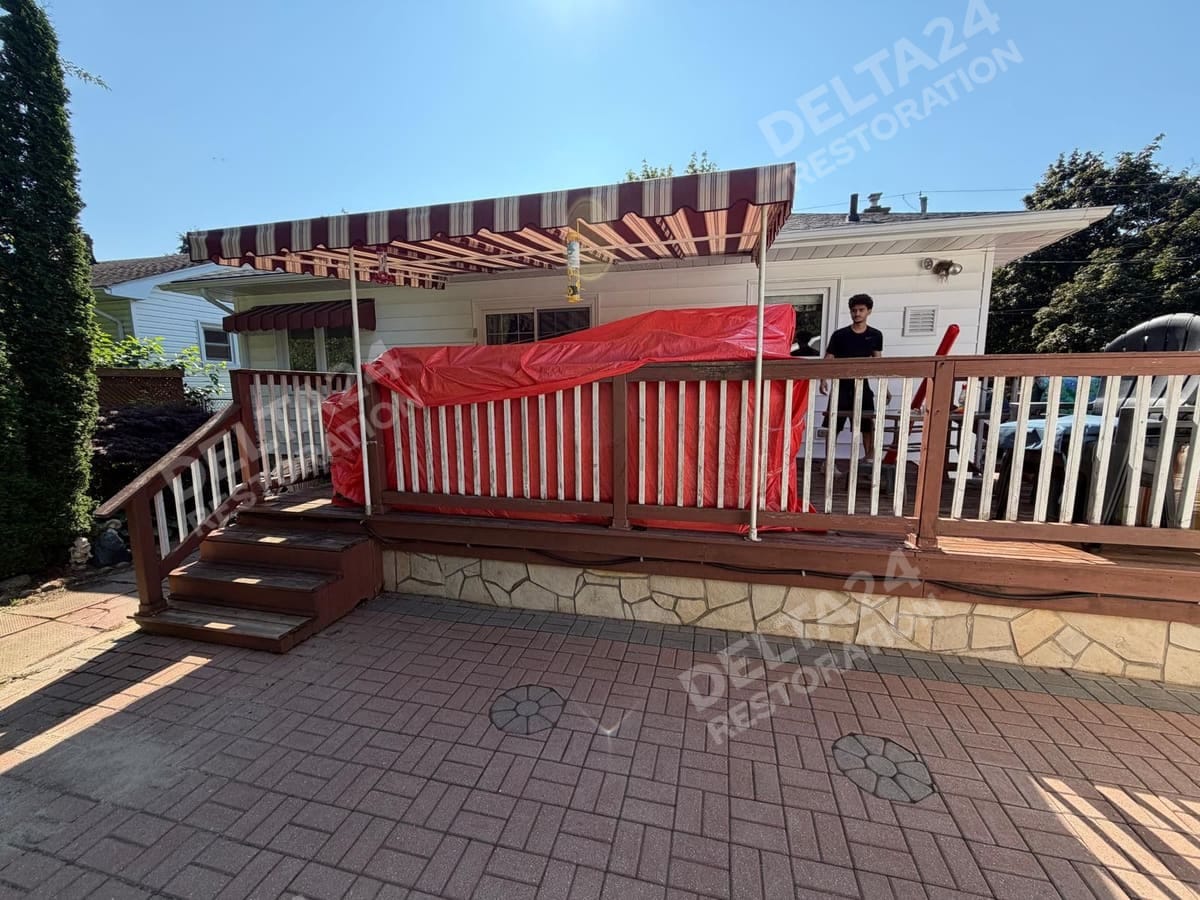
- Wrapped the furniture and moved the contents out: packed boxes into the dining room upstairs and larger pieces onto the deck under tarps.
- Started a dehumidifier straight away to pull moisture out of the air while the room was cleared.
- Pulled up the wet carpet and underlay.
- Stripped the panelling and wall finishes back to the studs around the room.
- Set air movers and dehumidifiers across the open floor and walls, and checked the materials with a moisture meter until they were dry.
- Put the panelling back once the walls were dry.
The result
- Wet carpet and underlay out of the house
- Walls opened so the framing could dry properly
- Contents protected throughout the job
- Room dried before it was closed up again
Know-how from our crew
Why the panelling had to come off
Wood panelling and drywall over a wet stud wall act like a lid. The framing and insulation behind them cannot dry, even with fans running in the room. Opening the wall is what lets air reach the wet material.
Packing out the contents
Moving belongings out of the wet room protects them and gives the crew a clear floor to work on. Boxes, furniture and anything that can be saved are moved to a dry part of the house or covered outside, and they come back when the room is finished.
How we know it is dry
We measure the materials with a moisture meter and compare them to dry material elsewhere in the house. The room is only closed up when the readings say it is dry, not after a set number of days.
The job in photos